 Inquire
 Calendar
 Giving
 Inquire
 Apply
Apply
Alumni Spotlight: Ford Church ’94
December 4th, 2025



Ford Church ’94
Founder & Executive Director of the Cottonwood Institute, Denver, CO
 Ford Church ’94 is the Founder and Executive Director of the Cottonwood Institute, a Colorado-based nonprofit that blends environmental education, outdoor adventure, and student-led service learning for public schools and youth organizations. Although based in Colorado today, the idea for Cottonwood took root here on Green Acres long before the organization existed.
As Ford recalls, “One of the things that really appealed to me about St. Martin’s was the outdoor ed program, which had such a powerful influence on my life. Looking back, there weren’t really any other high schools at that time that offered that kind of program at that level.” Those frequent canoe trips, backpacking adventures, and student-led expeditions sparked something in him. Even after a first outing that was “hot, wet, and sandy,” he remembers thinking, “This is awesome! I can’t wait to do this again.”
Today, Ford leads an organization that brings those transformative experiences to students who might never otherwise access them. Cottonwood runs year-round programs across Denver, Boulder, and Aurora, working primarily with under-resourced schools and youth-serving nonprofits.
As he explains, “Even these kids out here in Denver, who see those mountains every day, have never been because their parents don’t recreate outdoors or they don’t have the gear or transportation. At Cottonwood, we work to break those barriers down and work with students who wouldn’t otherwise have access.” Programs include everything from fire building and natural shelter construction to snowshoeing, winter survival skills, and wilderness observation. “A lot of people think we just connect kids to nature, but that’s maybe 30% of what we do,” Ford says. “I’m more inspired by the action projects students take on.” Through Cottonwood’s CAP Class (Community Adventure Program), students identify a social or environmental issue they care about and complete a multi-step service-learning project to address it. “It helps strengthen those life skills - they know they have to work together, they have to communicate, they have to agree on an issue. They learn that if we wait too long, we're not going to be able to really do anything meaningful.”
In today’s overly connected world, programs like those that Cottonwood offers are perhaps needed more than ever. “It can be liberating just getting out of the classroom and into the great outdoors. Plus there are also just huge mental health benefits of getting outside, unplugging. I think one of the most interesting things we do on our overnight trips - we just do what we call a Sit Spot in the very beginning where we tell each kid to separate from the group and from their friends, explore this new space we’re in, and then they just sit down in this one spot and just forget about everything else, and just observe what's going on around them. You can look at the clouds. You can listen to the wind. You can watch the ants on the ground, whatever. And I tell you, consistently, people would tell me that that was the best part of the trip! And it’s the part of the trip where we did nothing! It’s wild, we're learning survival skills, we're starting fires, we're playing games in the evenings, we're doing night hikes and think about all these activities that we do and how to scaffold them and arrange it all in a meaningful way, and their favorite thing was doing nothing…just being in a quiet space in nature.”
Looking back, it was Ford’s passions that began during a similar setting. St. Martin’s Outdoor Education program didn’t just introduce him to the wilderness; it taught him responsibility, leadership, and adaptability. “As students, we were in charge of planning all the trips - logistics, food, everything. It’s different than going to a camp where everything is handled for you. You’re given the tools and leadership skills to problem-solve when things go wrong.” Spending so much time outdoors “really helped form my service ethic, my environmental ethic, and wanting to tread lightly on our planet.” It was during those trips that he says “the seed that was planted that eventually led me to establish Cottonwood…because I wanted to make this kind of programming accessible to other kids, especially kids who didn’t have the resources and means of the students who went to St. Martin’s.”
Ford can easily name the teachers who shaped him, including Tim Rice and Eric Bajon, along with his freshman-year biology teacher, Dr. Leslie, who “made you feel comfortable around science, even if you weren’t science minded. He just had a passion for biology.” And he still thinks of Ms. Beckman: “She really taught me how to write and write well….I think of her when I’m writing grants - I try to craft a story and make a meaningful connection.”
Beyond academics, St. Martin’s gave Ford something he continues to seek and cultivate: community. “The lifelong friends I made there meant the most to me. We still keep in touch, and we have a guy trip every other year in Colorado.” That sense of belonging - the kind modeled at St. Martin’s - has shaped his leadership and the culture he strives to build at Cottonwood. “I think I’ve craved community throughout my life, really in college and even with Cottonwood. We’re always trying to build a strong community, and St. Martin’s always modeled that for me.”
Ford’s career path took several influences to converge, including his Outdoor Ed foundation, a marketing degree from the University of Denver, and an unexpected connection to the Boulder Outdoor Survival School, where he worked for three years. Their rigorous training, which included a 14-day survival course with nothing but “a knife, a metal cup, and the clothes on your back,” pushed him physically and mentally and clarified his purpose.
“I learned a ton from this school, and it really helped me realize that I wanted to work with kids and create a youth education outdoor program.” This realization led him to pursue a master’s at Prescott College, focused on outdoor education, environmental education, and service learning. “What came out of that experience was our CAP class,” which remains the core of Cottonwood’s programming.
Nature has provided inspiration for Ford throughout his life; even the name Cottonwood came to him on a hike, when he found his own Sit Spot. “I was taking a break in a grove of cottonwood trees, thinking back to my survival school days. The cottonwood is a go-to survival tree - it’s a water indicator, you can make friction fire from it, make shelter, it has edible and medicinal properties. And I love the way the leaf has a unique, branded look.”
After two decades of impact, Ford remains driven by the outcomes he sees in students. “Hearing from former students that this program changed their life and set them on their path - that’s just super rewarding….I kind of have my dream job.”
When asked what advice he would share with today’s students, he reflects: “I had a lot of passions and interests and didn’t know exactly what I wanted to do. But look for colleges with a strong community and a strong alumni base. Those people are your safety net - that’s your support network.”
Other articles to consider
 May18LSU Star and St. Martin's Alum Harlem Berry ’25 Inspires Young Athletes at St. Martin’s Youth Football Camp
LSU running back and St...See Details
May18LSU Star and St. Martin's Alum Harlem Berry ’25 Inspires Young Athletes at St. Martin’s Youth Football Camp
LSU running back and St...See Details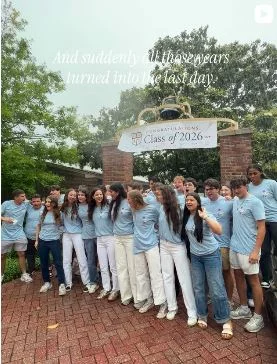 May1Class of 2026 Celebrates a Memorable Senior Chapel and Ringing of the Bell
Senior Chapel marks a p...See Details
May1Class of 2026 Celebrates a Memorable Senior Chapel and Ringing of the Bell
Senior Chapel marks a p...See Details Apr30Celebrating the 2026 Martin de Tours and Dorothy Porter Service Award Recipients
St. Martin’s was plea...See Details
Apr30Celebrating the 2026 Martin de Tours and Dorothy Porter Service Award Recipients
St. Martin’s was plea...See Details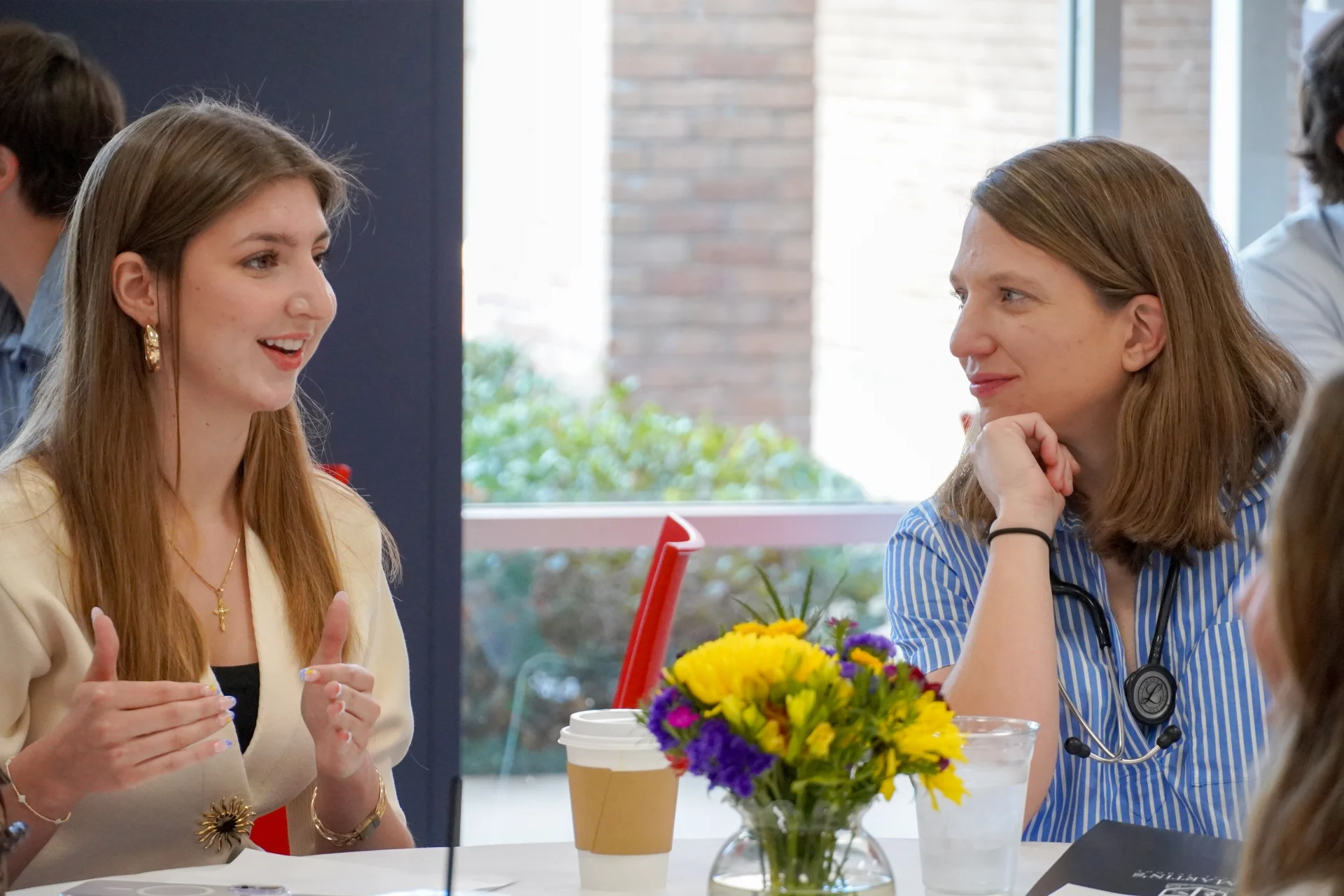 Apr23Young Alumni Impart Wisdom on Upper School Students at Career Day
Yesterday, the Solomon ...See Details
Apr23Young Alumni Impart Wisdom on Upper School Students at Career Day
Yesterday, the Solomon ...See Details

Categories
- Academic Excellence
- Alumni
- Alumni Spotlight
- Athletics
- Arts
- Authors & Speakers
- Community
- Episcopal Tradition
- Faith
- Faculty and Staff
- Innovation + Design
- Mission
- StM Traditions
- World Languages
- George Cottage
- Lower School
- Middle School
- Upper School
- Campus of Opportunity
- Love of Learning
- Student Support Services
- Parents
- Alumni Awards
- Admissions Resources
- Alumni Stories
- College Counseling
 Inquire
 Family Login