 Inquire
 Calendar
 Giving
 Inquire
 Apply
Apply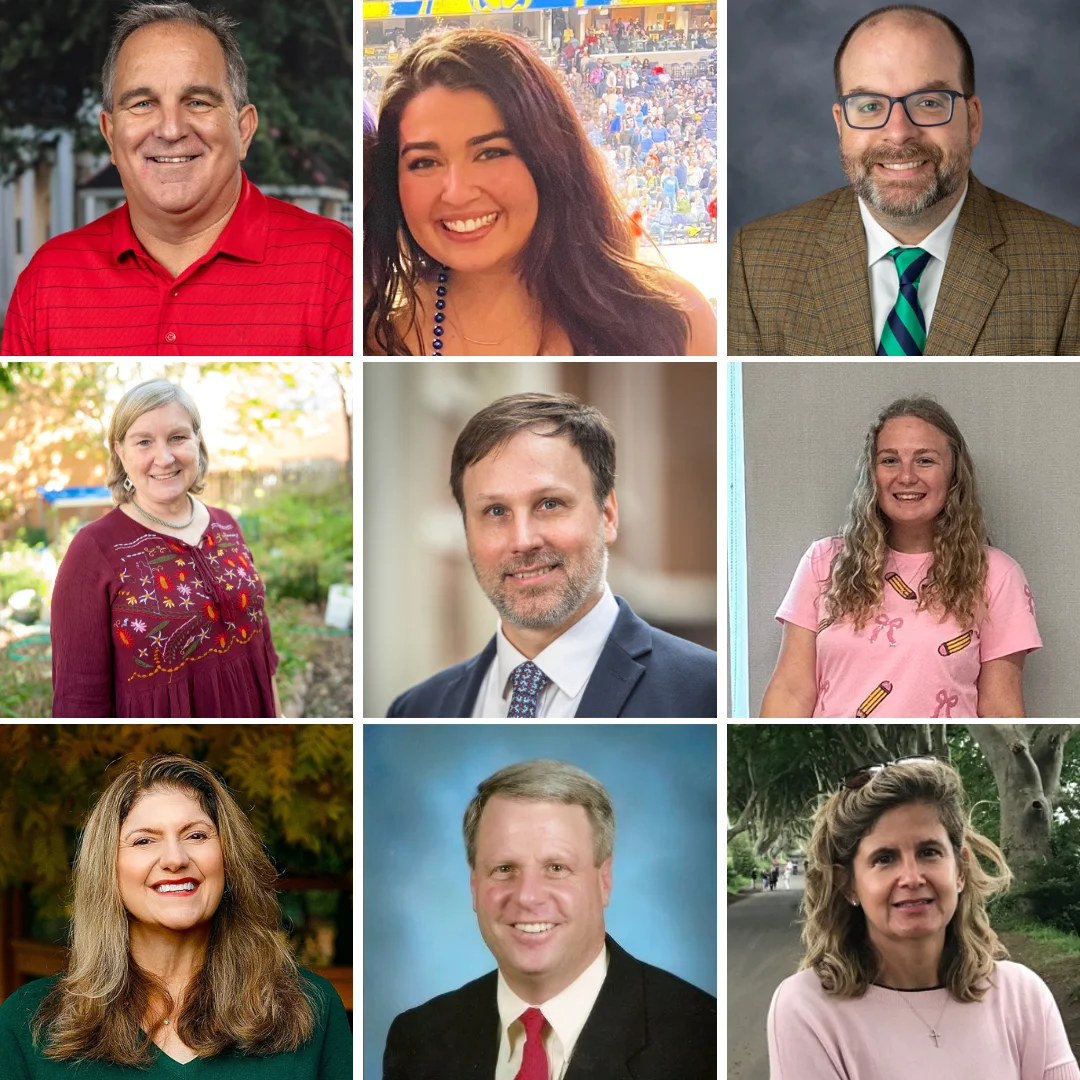
From Green Acres to the Greater Good: St. Martin’s Alumni Living Lives of Purpose and Service
December 16th, 2025



Across classrooms, campuses, and mission-driven work in the communities they serve, St. Martin’s alumni keep proving that the school’s motto is not simply a tagline, it’s a calling. Faith, scholarship, and service is a way of moving through the world - learning deeply, leading humbly, and choosing work that widens the circle of dignity and belonging. As Head of School Whitney Samuel Drennan ’94 reflects, “The foundation I received at St. Martin’s shaped the person I am today.” From the moment she arrived on campus as an eighth grader, she recalls seeing that “the faculty were invested in us as students….they knew us, cared about us, and wanted us to succeed.” That culture of care, opportunity, and high expectation did more than prepare her for college; it inspired her to become an educator - and ultimately a school leader - herself.
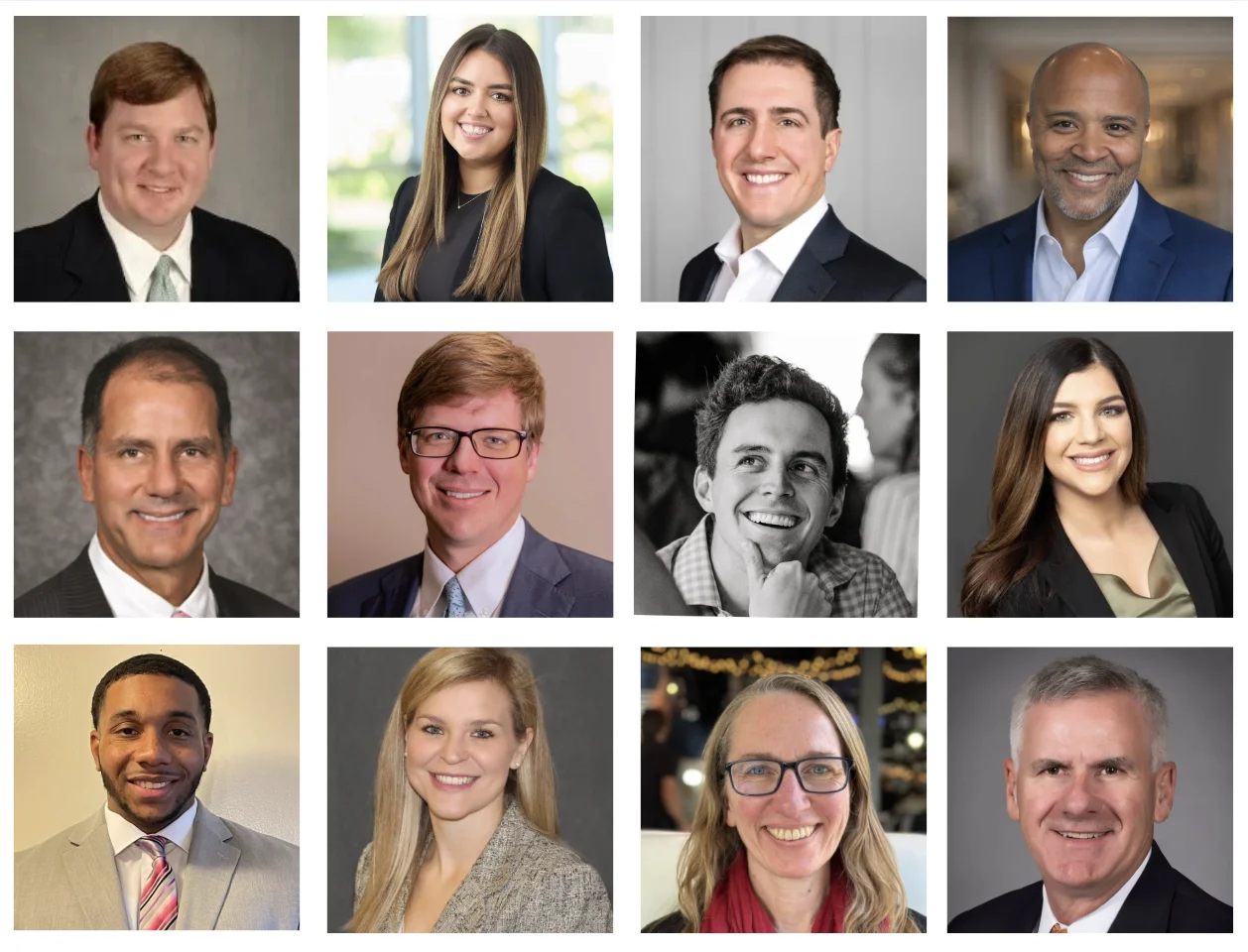
What links the alumni featured in this profile is a shared instinct, to ask Who needs help? And then to bring both heart and skill to the answer. Like Whitney, whose path was shaped by teachers such as Janis McCormick and now comes full circle as she leads the school she once attended, these alumni carry St. Martin’s foundation forward through education, counseling, coaching, nonprofit leadership, and advocacy. Their lives share a clear through-line: service is not an add-on, but an orientation of the self toward others, that is sustained by discipline, relationships, and the enduring belief that people are worth the work.
Service as vocation, not a side project
For some Saints, service arrived as a clear calling early on. For others, it emerged after a detour, a pivot, or a life-altering moment that reshaped how they define “success.”
Marta Garcia Blanco ’82 didn’t set out to lead a nonprofit. Her early career focused on research and strategy, work that honed her ability to listen, analyze, and build purposeful plans. When her daughter Sofia’s story brought her into the world of pediatric cardio-oncology, those same skills became tools for compassion. Through Sofia’s Hope, Marta has turned professional strength into mission-driven leadership, supporting children with cancer and their families while advancing awareness and care. She describes a St. Martin’s foundation that reinforced the value of education and nurtured the confidence to go beyond the familiar — exactly the kind of courage service often requires.
Carl Baloney ’02 has built a career in public service and advocacy with a steady focus on equity and community health. As President & CEO of AIDS United, he leads efforts to end the HIV epidemic through policy, strategic grantmaking, and support for community-based organizations nationwide. His reflections echo something St. Martin’s families recognize immediately: the work of service isn’t separate from scholarship, it depends on it. The ability to think critically, write clearly, and approach complex challenges with humility becomes, in Carl’s hands, a form of care.
And then there are alumni like Todd Trenchard ’76, whose life has been shaped by leadership and a deep commitment to community development. A Marine Corps veteran and the founder and CEO of the Bacot Foundation of South Mississippi, Todd’s path weaves together public relations, recovery support, transitional housing, and ongoing civic engagement. In his telling, St. Martin’s was a cornerstone that helped him build the confidence and social fluency to lead, connect, and keep showing up where needs are real and persistent.
Education as transformation
If service is the “why,” education is often the “how.” Many of these alumni have chosen classrooms not because they’re easy places to be, but because they are among the most powerful places to shape lives.
Tia Schlesinger ’14 teaches third grade with the kind of intention that comes from having experienced joyful, meaningful learning herself. Her path took her through Rhodes College and the Memphis Teacher Residency, where she trained alongside seasoned educators while earning a master’s degree in Urban Education. In her memories of St. Martin’s, with cherished traditions like Community Day, Cowboy Day, Elizabethan Day, learning was made accessible through experience, creativity, and connection. That lesson now lives in her own classroom, where effective teaching provides opportunities for students to explore, create, and belong.
That same belief that students thrive when they are known has anchored Billy Harrison ’82 through 35 years in education. Teaching middle school math, stepping into what students need, and coaching across seasons, Billy credits St. Martin’s for showing him “every day what good teaching looked like.” He points not only to expertise, but to humanity, remembering educators who cultivated relationships and modeled what it means to be both excellent and kind. Decades later, he still teaches from that premise, helping to build confidence to help bolster his students’ success.
Sometimes the calling to teach arrives with a surprising clarity. Malorie Saucier ’20 began college on a pre-med track, imagining a future in medicine, before realizing her heart kept pulling her back toward children and community. She describes prayer, discernment, and the sense that God was asking her to use her gifts in a classroom to create a “home away from home,” just as St. Martin’s had done for her. Now a first grade teacher and coach at St. Matthew the Apostle School, Malorie is building the same kind of nurturing relationships she once received, shaped also by the example of her mother, longtime St. Martin’s educator Mary Lee Wayman Saucier ’91.
For Rachel Wittich Edwards ’87, education became a lifelong act of advocacy. When parents asked her to create an affordable, individualized environment for students with special needs, she began Wedgwood Academy in her living room with eight students. Nearly three decades later, the school has served roughly 1,000 students, including hundreds with autism, dyslexia, and ADD/ADHD - young people too often defined by what they struggle with rather than what they can become. Rachel’s work insists on a different story: one where connection, high expectations, and joy in learning open doors that stigma tries to close.
And for Andrew O’Brien ’01, scholarship itself became the pathway to service. A “lark” decision to take Latin in middle school set a trajectory he still walks as a Middle School principal and Latin teacher at St. Paul’s Episcopal School. He carries forward the memory of rigorous teachers who combined high expectations with humor and care, and he’s candid about his own growth as a student, remembering what it feels like to need a nudge toward potential. That honesty is part of his leadership: he looks for the students who need someone to see what they can be before they believe it themselves.
Across these educators, the shared theme isn’t simple nostalgia, but rather continuity. They are taking what they learned about learning - its joy, rigor, and relational power - and passing it forward, one student at a time.
Faith as a compass, not a tagline
In Episcopal education, faith is not a boundary line; it’s a grounding. A way of treating people as sacred, and receiving all of God’s children. It stands for commitment to a community that welcomes, invites, and holds space for differences.
That grounding comes full circle at St. Martin’s today, where several alumni now serve the school as faculty and staff—living examples of faith, scholarship, and service in action: Betsy Fox '82, Allison Lewis '82, Frances Roney '10, Michael Odom '92, Katie Faught '93, Christina Comer '91, MaryLee Saucier '91, Ashley Bozeman '85, Roby Arensman '91, Wally Porter '76, Whitney Drennan '94, West Stout '99, Meri Monsour '02, Irene McCarthy '06, Andrea Bonnette '98, and Katie Laforge '21.
Dr. Joseph Kreutziger ’89 describes how St. Martin’s formed his belief that great learning depends on great mentors and relationships. Now in his seventh year as Head of School at St. George’s Episcopal School, he leads with that same relational philosophy - community-centered, rooted in dignity, and shaped by traditions that teach students to serve and see the worth in every person. He remembers chapel and the joy of belonging, but what lasted was the ethic beneath it: compassion, humor, grace, and the call to use one’s gifts for others.
Andrew speaks to this plainly, too: Faith, Scholarship, and Service sit at the heart of Episcopal education because they build communities where students are invited—never pressured—to engage tradition in a way that fits. In a world that often struggles to hold both conviction and openness, he sees Episcopal schools modeling respect, love, and dignity for all people. That, in itself, is service.
Even outside traditional school leadership, this compass shows up in unexpected places. Chris Tidmore ’92, now Director of External Affairs for the New Orleans Opera, sees his work as expanding access - helping students experience an art form for the first time, opening doors that might otherwise stay closed. His story carries the imprint of mentors who advocated for him, made room for him, and taught him that the motto is lived in how you treat people, especially when they most need to feel safe and seen.
And it shows up in the wilderness, too. Ford Church ’94, Founder and Executive Director of the Cottonwood Institute, brings environmental education and service-learning to under-resourced students in Colorado. What began in St. Martin’s Outdoor Education program—student-led trips, responsibility, leadership, problem-solving—became an organization that breaks down barriers to outdoor access and helps students turn concern into action through service projects. The work is practical, but the deeper purpose is unmistakable: to form young people who can listen, collaborate, and care for the world they share.
The lasting lesson
None of these alumni describe their career progression as a straight line. They describe formation: teachers who modeled excellence with humanity, traditions that anchored identity, and a community that taught them they belonged, and therefore had an obligation to help others belong, too.
That is the St. Martin’s story carried forward: Faith as a posture of dignity and grace. Scholarship as a discipline that equips students to engage complexity with clarity. Service as the natural response to a world that needs thoughtful, steady-hearted leaders.
In classrooms and nonprofits, on stages and trails, these Saints are doing what St. Martin’s has always asked of its students: learn with purpose, lead with integrity, and serve with the kind of care that changes lives—not all at once, but for good.


Categories
- Academic Excellence
- Alumni
- Alumni Spotlight
- Athletics
- Arts
- Authors & Speakers
- Community
- Episcopal Tradition
- Faith
- Faculty and Staff
- Innovation + Design
- Mission
- StM Traditions
- World Languages
- George Cottage
- Lower School
- Middle School
- Upper School
- Campus of Opportunity
- Love of Learning
- Student Support Services
- Parents
- Alumni Awards
- Admissions Resources
- Alumni Stories
- College Counseling
 Inquire
 Family Login